Scroll, Skip, Obsess: The Gen Z Effect That's Rewriting the Rules of Original Streaming Content
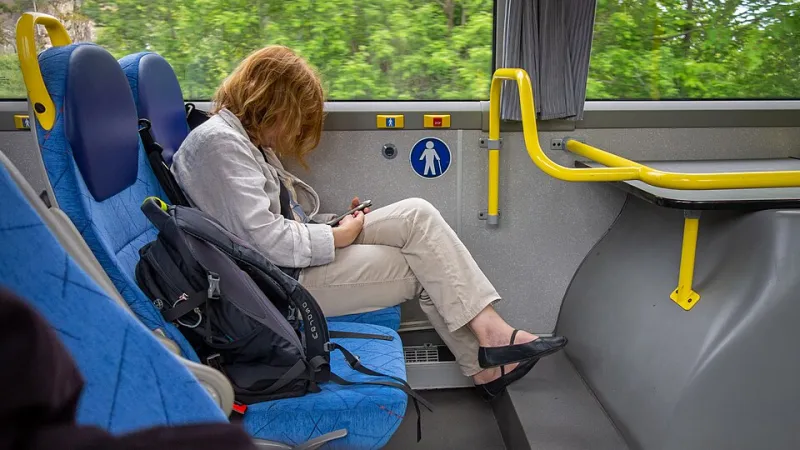
Photo: W.carter, CC BY-SA 4.0, via Wikimedia Commons
Picture this: a 19-year-old in Columbus, Ohio discovers a new streaming show not from a trailer, not from a billboard, but from a six-second clip on TikTok where someone is absolutely losing their mind over a plot twist. She watches it. She shares it. By the time she actually sits down to stream the episode, she's already emotionally primed and ready to be a fan.
That's not a hypothetical. That's Tuesday.
Gen Z — roughly anyone born between 1997 and 2012 — is now one of the most influential audience segments in the streaming world. And the way they consume, discover, and talk about content is forcing platforms to rethink pretty much everything about how original series get made and marketed.
The Attention Span Myth (And the Real Story)
Let's clear something up right away: the whole "Gen Z has no attention span" thing is a lazy take. What's actually true is more nuanced and, honestly, more interesting. Gen Z audiences are incredibly capable of deep engagement — binge-watching entire seasons, rewatching scenes, building fan theories — but they need to be hooked faster than any previous generation. The first episode, the first scene, sometimes the first minute has to earn their attention before they give you the rest of it.
That's a direct consequence of growing up with TikTok, Instagram Reels, and YouTube Shorts. When you've spent years training your brain to evaluate content in seconds, you develop a sharp instinct for what's worth your time. Shows that ease into their premise over three episodes are fighting an uphill battle with this demographic.
Some creators get this. Others are still catching up.
What the Numbers Actually Say
Data from various industry trackers tells a consistent story. Shorter episode runtimes — in the 25-to-40-minute range — perform better with younger audiences than traditional hour-long drama formats. Platforms have noticed. You can see it in the episode structures of several recent breakout hits that skew young.
There's also the discovery angle. A significant portion of Gen Z viewers report finding new shows through social media clips before they ever see a platform-native ad. That means the most viral moment in a series — a shocking line, an unexpected kiss, a gut-punch scene — is often more effective marketing than a polished two-minute trailer. Smart platforms are now building their content strategies around creating those moments intentionally, not just hoping they happen organically.
And then there's the parasocial layer. Gen Z is extraordinarily engaged with creators and cast members as individuals. A streaming original that features talent with existing social followings starts with a built-in promotional engine that no marketing budget can fully replicate.
Shows That Got It Right
Look at what happened with Outer Banks on Netflix. It launched in 2020, during the pandemic, and became a genuine phenomenon — not because of traditional marketing, but because of TikTok. Clips went everywhere. The cast became internet personalities. Teens were obsessing over the show's aesthetic as much as its plot. Netflix leaned in hard, and the show became one of its most-watched originals.
Similarly, Euphoria on HBO Max — while not exclusively a Gen Z production — understood that its audience would dissect every costume, every soundtrack choice, every visual reference and spread it across social media. The show was practically designed to be screenshotted and shared. That's a new kind of intentionality in production design.
More recently, shorter-form content experiments — limited series with punchy episode counts, anthology formats, even shows structured around social media formats — are finding traction with younger viewers who prefer their stories delivered efficiently.
How Creators Are Adapting (And Struggling)
Talk to writers and showrunners working in this space and you'll hear a mix of excitement and genuine tension. On one hand, the pressure to make every episode immediately compelling has raised the bar creatively. You can't coast on setup episodes. You have to deliver.
On the other hand, some creators feel like the demand for viral moments is pushing storytelling toward spectacle over substance. When the metric is "what six seconds of this will blow up on TikTok," there's a risk that nuanced, slow-burn narratives get deprioritized in favor of shock value.
The best work happening right now seems to thread that needle — shows that are immediately engaging and have something real to say. That's harder to pull off than it sounds, but when it works, the Gen Z audience doesn't just watch. They champion the show in a way older audiences rarely do.
Five Things Streaming Platforms Are Doing Differently Because of Gen Z
-
Episode length flexibility — Platforms are greenlighting series with shorter runtimes and giving creators more latitude on episode counts rather than forcing the traditional 8-to-10-episode structure.
-
Social-first marketing — Trailers are still made, but the real investment is in clip strategy: which scenes get released early, when, and on which platforms.
-
Cast-forward promotion — Talent with social followings is increasingly factored into casting conversations, not just creative ones.
-
Faster premiere pacing — Some platforms are dropping more episodes at launch to prevent the "I'll wait until it's all out" behavior that delays the cultural conversation.
-
Interactive and second-screen features — More platforms are experimenting with companion content, behind-the-scenes drops, and cast commentary that keep Gen Z engaged between episodes.
The Bigger Picture
What Gen Z is doing to streaming content isn't dumbing it down — it's accelerating it. The expectation that every episode earns its runtime, that every story justifies the time investment, that discovery should feel organic and social rather than top-down and corporate... these aren't bad demands. They're high standards.
Streaming platforms that treat this generation as passive consumers are going to struggle. The ones building genuine dialogue — where the audience shapes what gets made, how it's presented, and how it spreads — are writing the next chapter of what original content even means.
And honestly? That's a more interesting story than the one where a network just tells you what to watch.