How Streaming Originals Quietly Ate Hollywood's Lunch — And Nobody Saw It Coming

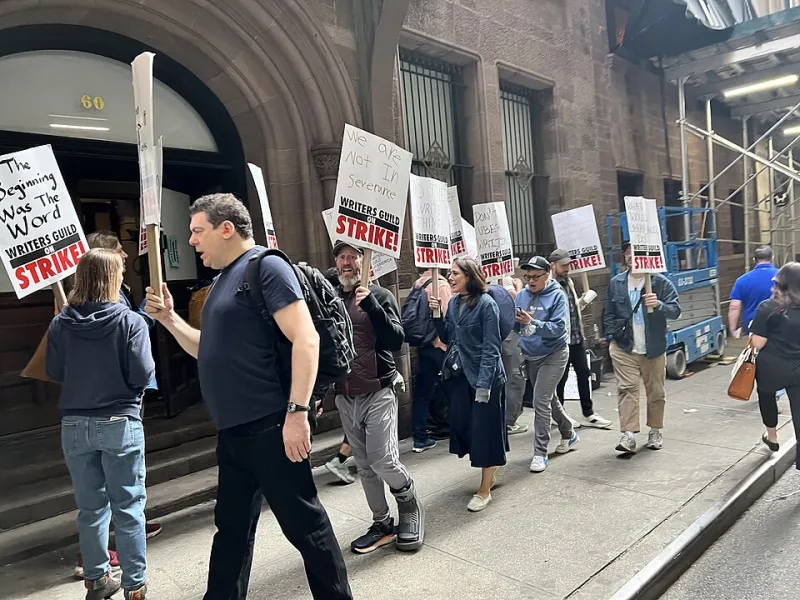
Photo: Susanne Nilsson from Trelleborg, Sweden, CC BY-SA 2.0, via Wikimedia Commons
For most of the 20th century, the movie theater was the undisputed king of American entertainment. You dressed up, drove out, and paid for the privilege of sitting in a dark room with strangers. Hollywood loved this arrangement. Blockbusters ruled the calendar, and studios competed for summer weekends like generals fighting over territory.
Then something shifted. Quietly, almost imperceptibly, the couch started winning.
Today, original streaming series aren't just competing with theatrical releases — in many measurable ways, they're outpacing them for audience attention, cultural conversation, and even raw revenue. The streaming revolution didn't announce itself with fireworks. It just showed up one Tuesday night when you couldn't stop watching one more episode.
The Numbers Don't Lie
Let's talk dollars and eyeballs for a second. According to Nielsen's streaming data, original series on major platforms consistently rack up billions of minutes of viewing time per week — figures that would make even the most successful theatrical run look modest by comparison. A top-tier streaming original can sustain audience engagement for months after its release, while a blockbuster movie typically peaks in its opening weekend and fades fast.
Consider what that means for advertisers, for cultural relevance, and for the sheer economics of entertainment. A film earns its money in a compressed window. A great original series keeps earning — through subscriptions, renewals, merchandise, and the kind of word-of-mouth buzz that money genuinely can't buy.
Production budgets tell a similar story. Premium streaming originals now routinely command budgets of $10 million to $20 million per episode. That's not a typo. Some prestige series have blown past $30 million per episode during peak production cycles. Studios building theatrical tentpoles used to hold a monopoly on that level of investment. Not anymore.
What Audiences Actually Want
Here's the thing nobody in a Hollywood boardroom wanted to admit for a long time: audiences don't just want spectacle. They want story. They want characters they can obsess over, plotlines they can argue about at work, and narratives complex enough to reward rewatching.
Original streaming series are engineered for exactly that. A ten-episode season gives writers room to breathe, develop subplots, and build the kind of emotional investment that a two-hour movie simply can't manufacture. By episode four, you're not just watching — you're attached. That psychological bond is incredibly difficult to replicate in a theatrical format, and it's the secret weapon that streaming platforms have been deploying for years.
Modern audiences, particularly in the 18-to-45 demographic that advertisers chase relentlessly, have also fundamentally changed how they relate to entertainment. They want to discover something, champion it, and share it. A great original series becomes a social identity marker in a way that going to see the latest franchise installment simply doesn't.
The Bold Bet That Paid Off
Platforms willing to take creative risks are the ones reaping the biggest rewards — and that's not a coincidence. When a streamer greenlit a dark, unconventional series that a traditional network would have buried in development hell, they weren't just being artsy. They were making a calculated bet that underserved audiences would flock to content built specifically for them.
That bet has paid off spectacularly, over and over again. Series exploring morally ambiguous protagonists, non-linear storytelling, and genre-bending premises have become the defining cultural touchstones of the past decade. These aren't niche curiosities — they're mainstream phenomena that dominate social media, spawn fan theories, and generate the kind of passionate viewership that studios dream about.
The lesson for platforms is clear: bold content doesn't just attract audiences. It retains them. Subscription-based models live and die by retention, which means the incentive structure actively rewards creative risk-taking in a way that traditional box office economics never did.
Legacy Studios Are Playing Catch-Up
To their credit, the major studios haven't been sleeping. Every significant Hollywood player has either launched a streaming arm or aggressively licensed content to existing platforms. The theatrical window — once considered sacred — has been compressed, experimented with, and in some cases abandoned entirely for certain titles.
But there's a cultural gap that's harder to close than a technology gap. Platforms that were born in the streaming era developed an institutional instinct for original content creation that legacy studios are still trying to replicate. The muscle memory is different. The development process is different. The relationship with creators is different.
When a studio greenlit a franchise sequel for the fifteenth time, they were optimizing for a known quantity. When a streaming platform greenlit a weird, ambitious original series that defied easy categorization, they were building something new. Over time, that difference compounds.
What This Means for the Future
We're not in the early days of this shift anymore — we're in the middle of it, and the trajectory is clear. Original series will continue to command larger budgets, attract bigger talent, and generate more sustained cultural impact than most theatrical releases. The platforms investing most aggressively in bold, original storytelling will be the ones that define the next decade of American entertainment.
For audiences, this is genuinely great news. More creative freedom means more interesting stories. More competition for subscriber attention means higher production values. More platforms willing to take swings on unconventional premises means more of the kind of content that actually makes you feel something.
The blockbuster isn't dead — but it's no longer the only game in town. And honestly? That's the most exciting development in entertainment in a generation.
At UFA Series, we've always believed that bold storytelling and original vision are what separate forgettable content from the stuff you can't stop thinking about. The data is finally catching up to what great series have always known: when you give audiences something genuinely original, they show up. Every time.